Sequencing

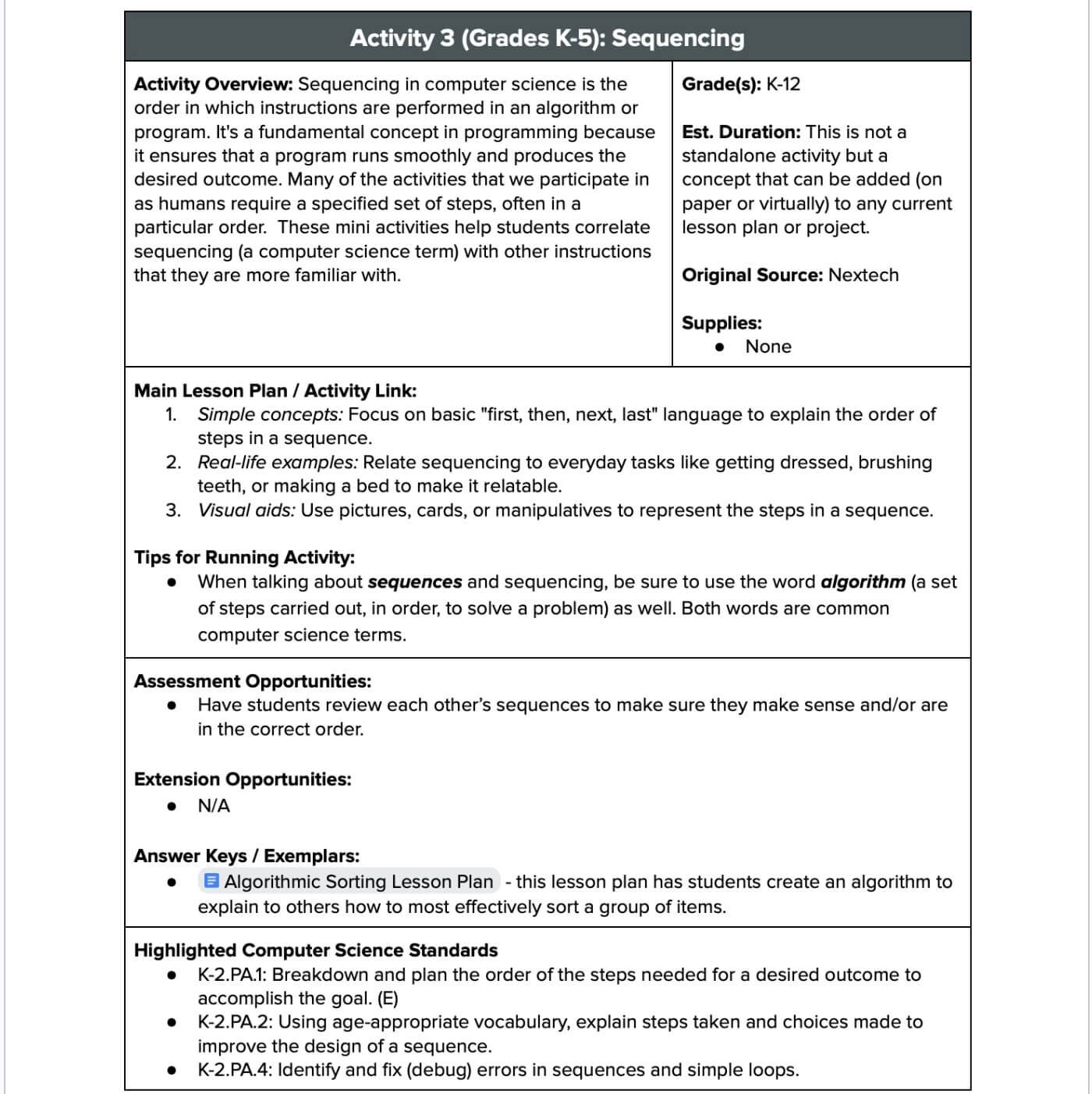
Sequencing in computer science is the order in which instructions are performed in an algorithm or program. It’s a fundamental concept in programming because it ensures that a program runs smoothly and produces the desired outcome. Many of the activities that we participate in as humans require a specified set of steps, often in a particular order. These mini activities help students correlate sequencing (a computer science term) with other instructions that they are more familiar with.


** This is not a standalone activity but a concept that can be added (on paper or virtually) to any current lesson plan or project.

Grade Levels: K - 12
Subject Matter: Algorithms, Cross-Curricular Integration: ELA, Cross-Curricular Integration: Math, Cross-Curricular Integration: Science, Cross-Curricular Integration: Social Studies
Concepts: Programs and Algorithms
Standards: K-2.PA.5, K-2.PA.1, K-2.PA.2, K-2.PA.4, 3-5.PA.1, 3-5.PA.3
  • Average Rating: 0.0 (0 ratings)

Main Activity

  1. Simple concepts: Focus on basic “first, then, next, last” language to explain the order of steps in a sequence. 
  2. Real-life examples: Relate sequencing to everyday tasks like getting dressed, brushing teeth, or making a bed to make it relatable. 
  3. Visual aids: Use pictures, cards, or manipulatives to represent the steps in a sequence.


  • Algorithmic Sorting Lesson Plan – this lesson plan has students create an algorithm to explain to others how to most effectively sort a group of items.

Tips for Running Activity

When talking about sequences and sequencing, be sure to use the word algorithm (a set of steps carried out, in order, to solve a problem) as well. Both words are common computer science terms.

About

Elements of this resource were created by the team at Nextech.

Learn More