Sorting and Searching Algorithms with Cards
Main Lesson Plan
Computers rely heavily on searching and sorting algorithms for several crucial reasons:
- Efficient Data Organization and Retrieval
- Optimizing Algorithm Performance
- Enhancing User Experience
In essence, searching and sorting algorithms are foundational to computer science because they provide efficient methods for organizing and retrieving data, which in turn improves the performance of many other algorithms and enhances user experiences across various applications.
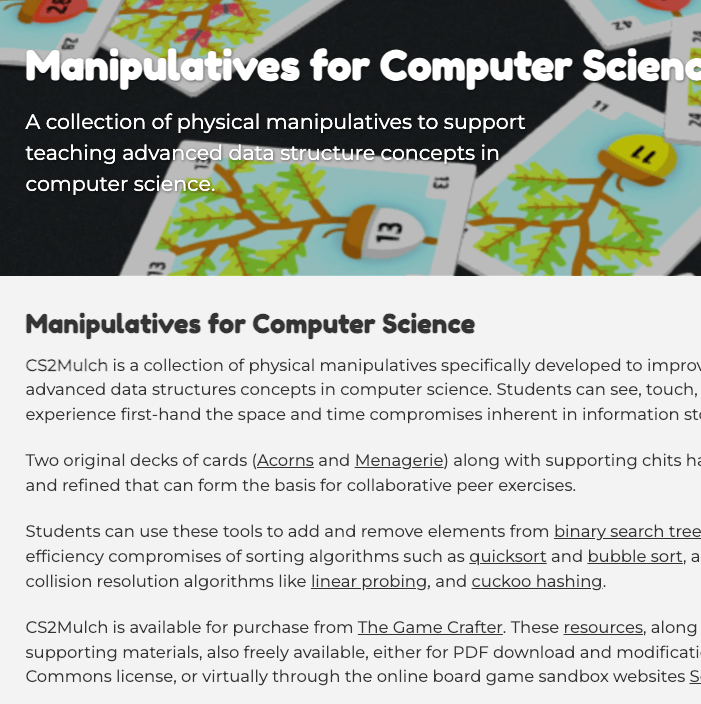
The CS2 Mulch website provides amazing resources for each sorting algorithm and binary search tree algorithms. Each algorithm’s page includes:
- Goals
- Video
- Materials
- Setup
- Algorithm
- Examples
- Exercises
- Evaluation Questions
Types of Sorts:
Types of Binary Search Tree Algorithms:
Computers rely heavily on searching and sorting algorithms for several crucial reasons:
- Efficient Data Organization and Retrieval
- Optimizing Algorithm Performance
- Enhancing User Experience
In essence, searching and sorting algorithms are foundational to computer science because they provide efficient methods for organizing and retrieving data, which in turn improves the performance of many other algorithms and enhances user experiences across various applications.
The CS2 Mulch website provides amazing resources for each sorting algorithm and binary search tree algorithms. Each algorithm’s page includes:
- Goals
- Video
- Materials
- Setup
- Algorithm
- Examples
- Exercises
- Evaluation Questions
Types of Sorts:
Types of Binary Search Tree Algorithms:
Computers rely heavily on searching and sorting algorithms for several crucial reasons:
- Efficient Data Organization and Retrieval
- Optimizing Algorithm Performance
- Enhancing User Experience
In essence, searching and sorting algorithms are foundational to computer science because they provide efficient methods for organizing and retrieving data, which in turn improves the performance of many other algorithms and enhances user experiences across various applications.
The CS2 Mulch website provides amazing resources for each sorting algorithm and binary search tree algorithms. Each algorithm’s page includes:
- Goals
- Video
- Materials
- Setup
- Algorithm
- Examples
- Exercises
- Evaluation Questions
Types of Sorts:
Types of Binary Search Tree Algorithms:
Tips for Running Activity
Watch the videos of the algorithm and practice a few times before doing it with your class. The individualized understanding will help you better explain and troubleshoot when your students are practicing the algorithms.
Watch the videos of the algorithm and practice a few times before doing it with your class. The individualized understanding will help you better explain and troubleshoot when your students are practicing the algorithms.
Watch the videos of the algorithm and practice a few times before doing it with your class. The individualized understanding will help you better explain and troubleshoot when your students are practicing the algorithms.
Assessment Opportunities
Each individual type of sort or binary search tree algorithm on the CS2 Mulch website includes questions that can be printed for worksheets as well as assessment questions.
Each individual type of sort or binary search tree algorithm on the CS2 Mulch website includes questions that can be printed for worksheets as well as assessment questions.
Each individual type of sort or binary search tree algorithm on the CS2 Mulch website includes questions that can be printed for worksheets as well as assessment questions.
Extension Opportunities
These extension suggestions are primarily for high school classess.
Using the cards to help explain tree lexicon in computer science can be incredibly helpful. This page has great graphics of child, parent, sibling, pibling, leaf, root, level and height. The page also includes exercise examples as well as evaluation questions.
For programming classes, once the students understand how the algorithm works, you can have them program the algorithm in the programming language you are using in your classroom. Be sure to have them include lots of print statements to ensure that the algorithm is working the way it is intended.
These extension suggestions are primarily for high school classess.
Using the cards to help explain tree lexicon in computer science can be incredibly helpful. This page has great graphics of child, parent, sibling, pibling, leaf, root, level and height. The page also includes exercise examples as well as evaluation questions.
For programming classes, once the students understand how the algorithm works, you can have them program the algorithm in the programming language you are using in your classroom. Be sure to have them include lots of print statements to ensure that the algorithm is working the way it is intended.
These extension suggestions are primarily for high school classess.
Using the cards to help explain tree lexicon in computer science can be incredibly helpful. This page has great graphics of child, parent, sibling, pibling, leaf, root, level and height. The page also includes exercise examples as well as evaluation questions.
For programming classes, once the students understand how the algorithm works, you can have them program the algorithm in the programming language you are using in your classroom. Be sure to have them include lots of print statements to ensure that the algorithm is working the way it is intended.